Filter by part used, roast and form, and line up to four products side by side. You can tell a tea merchant's own location apart from where the leaf was grown, and check the brewing conditions and sources each maker publishes.
Entries are edited from information each company has published; they are not tasting scores, and this is not an exhaustive list of products. Blank fields mean the reference page did not state it. Whether a product contains added sugar is taken from the sugar entry in the ingredients list, and 'light' or 'deep' follows each company's own wording.
Compare up to four products at a time. Changing the filters keeps your selection.
Tea stems given a light roast; the maker describes the toastiness and clear taste that come from heating the stems through to the core, and suggests 6 g to 260 ml of boiling water for 25 seconds, or 6 g in 600 ml of cold water for three hours.
Leaves rather than stems, lightly roasted, which the maker describes as a fresh aroma drawing on the leaf's umami; 6 g to 260 ml of boiling water for 30 seconds, or 6 g in 600 ml of cold water for three hours.
A loose-leaf hojicha made from domestic green tea, which the maker describes as having roast aroma and a light finish with faint bitterness and umami; brewed with a generous 10 g to 240 ml of water at 100°C for 30 seconds.
Stems that Ippodo says are roasted deeply, described as having a coffee-like aroma, body and sweetness — a useful reminder that 'stem' or 'bō' in a name does not mean a light roast.
Sencha blended with karigane, the stem tea obtained from matcha raw material, and roasted; the maker's article says Gosho Kaori is finished lightly, and the product page describes the distinctive aroma this blend gives.
First-flush kawayanagi blended with karigane, the stem tea from matcha raw material, and roasted; the maker's article says this one is finished more deeply than Gosho Kaori, so blend and roast both differ.
The lightly roasted stem tea in 3 g bags: two bags to 260 ml of boiling water for 45 seconds, or two bags in 600 ml of cold water for three hours — a different setting from the 25 seconds given for the loose leaf.
Leaves given a stronger, deep roast; the maker suggests drinking it straight or as milk tea, chai or with soda, with 6 g to 260 ml of boiling water for 30 seconds.
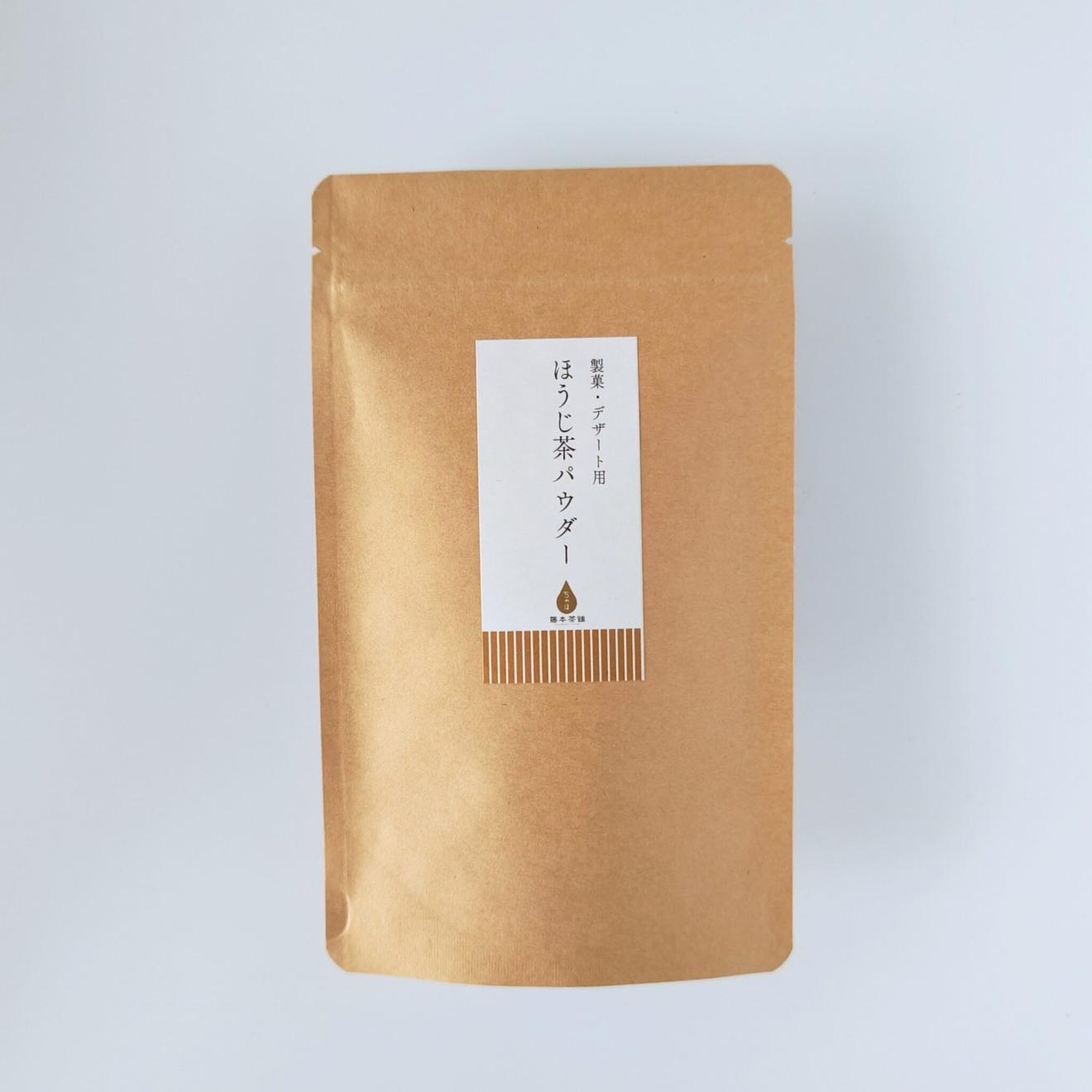
Unsweetened powder made by roasting Mie-grown tea and milling it fine, for cookie and cake batters or dusting over ice cream; unlike an instant, the maker notes that particles may remain in a latte.
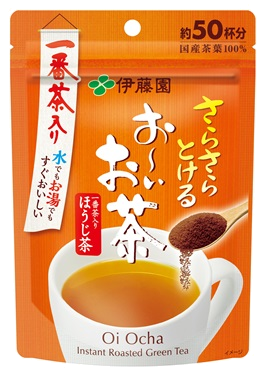
An instant hojicha made from domestic bancha and first-flush tea, with dextrin and vitamin C also listed; the official latte for one uses a tablespoon of powder, 30 cc of hot water and 140 cc of milk.
First-flush leaf only, finished with a deep roast, which the maker describes as toasty with a faint sweetness; 3 g to 120 ml of water at 90–100°C for 30 seconds, in a 100 g pack.
Stem tea that the maker says is roasted slowly over a strong flame, sold as 180 g of loose leaf and brewed by pouring freshly boiled water into the pot.
Black tea stems, roasted, which the maker describes as having a candy-like sweetness; 3 g to 150 cc of hot water for two minutes, or 10 g in 1 L of water for four hours.
Described by the maker as holding both sencha's umami and astringency and hojicha's toastiness, with a herb-like note; 'ao' is the product name, not a shared roast level, and the 80 g loose leaf is the version listed here.
Sold under the name 'deep roast', with the maker highlighting roast toastiness and recommending it both hot and cold; the 200 g loose leaf is the version listed here.
The 'light roast' loose leaf, which the maker describes as a clean drink in which green tea umami comes through, suggested alongside food and sold in 200 g.
150 g of loose leaf that Chasandai says uses Shimane first-flush tea, brewed with water straight off the boil; 'kin-in' is a product name and not an indication of roast.
Shimane green tea combined with powdered Shimane yuzu in 3 g bags, eight to a pack; the official cold brew uses two bags in 400 ml of water, refrigerated for two hours or more.
Stems from Makinohara and Tenryu in Shizuoka, which the maker describes as mellow with a gentle aroma; the loose leaf is brewed with 8 g to 150 ml of water at 100°C for 30 seconds.
A 60 g organic-labelled domestic blend suggested with Japanese food, Western food and desserts: 4 g to 120 ml of water at 90–100°C for 30 seconds uncovered, or 25 g in 1 L of water chilled for 3–8 hours.
A domestic blend milled whole into 100% hojicha powder, which the maker warns clumps because nothing is added to help it dissolve; for a latte, whisk 3 g of powder with 3 g of sugar in a little hot water, then add milk.
Stems of 'Yabukita' from Kakegawa in Shizuoka, roasted with far-infrared heat and sold as a single cultivar rather than a blend; 4 g to 120 ml of water at 90–100°C for 30 seconds, with shortcake or baked sweet potato suggested alongside.
Tea from Kaita in Okayama, roasted strongly and then smoked over cherry chips, with nuts, olives, dried fruit and chocolate suggested alongside; the leaf comes from Kaitaen Kurosaka Seicha.
A 100 g pack listing hojicha from Niyodogawa in Kochi as its ingredient, which the maker says is made by roasting sencha at high heat and offers alongside its own tea sweets.
First-flush stem tea, sencha and bancha blended and roasted in-house, which the maker describes as smoky and mellow; about 3 g with boiling water for one to two minutes, or three tablespoons in 2 L of water chilled for about two hours.
A 200 g loose leaf with three methods given — 3 g to 120 ml of boiling water for 30 seconds, 10 g in 750 ml of water for three to four hours, or brewed a little strong and poured over ice — recommended by the maker with or after a meal.
Mature leaves together with stems and twigs, none of them sorted out, rested in store for a period and then slowly roasted just before shipping, which the maker describes as a clean, sweet aroma.
First-pick sencha rested and then given a lighter roast, which the maker describes as sweet, toasty and fruit-like — a different raw material from the same grower's hoji bancha.
First-flush leaf from seed-grown 'misho zairai' tea bushes, given a lighter roast and described as individual in taste and aroma; 80 g of loose leaf from a grower in Asamiya, Shiga, that sells only tea from its own garden.
Spring-picked leaf that the maker says is roasted harder than usual to bring out toastiness, described as clean-tasting, brewed with boiling water and also drunk chilled.
12 g cold-brew packs of domestic green tea that Myokoen blends and roasts for toastiness with a clean sweetness; one pack in about 1 L of water, refrigerated for roughly one to two hours.
Sold under the name 'tsuyobi': domestic green tea selected, blended and roasted with adjusted heat, which the maker describes as toasty with a clean sweetness.
A cold-brew-only hojicha from domestic green tea in 5 g bags, 20 to a pack, brewed in cold water in the fridge; Morinoen notes a moderate astringency and a sweet finish.
Stems only, roasted, which the maker describes as mellow with a faint sweetness; 5 g to 400 ml of boiling water for two to five minutes, and for a cold cup, let the brewed tea cool before refrigerating.
First-flush tea from Tsuchiyama Tongu in Shiga that the maker finishes slowly at low temperature, listed as deep-roasted over a direct flame, with a toasty aroma, a rich taste, and a hojicha latte in warm milk also suggested.
Domestic first-flush kamairi-cha given a light roast with high-temperature hot air for a sweet, gentle aroma, suggested hot, cold-brewed, or brewed strong over ice, and alongside cake or cookies.
A tencha-based hojicha powder that the maker describes as clean and easy to drink, offered for baked sweets and as a topping for ice cream, with 2–3 g to 100 ml of milk for a latte.
Tencha roasted firmly and milled, with no sugar added, which the maker describes as rich with a deep roast aroma; 2–3 g to 100 ml of milk for a latte, or use it in baked sweets.
White stems from Kagoshima first-flush tea, lightly roasted for toastiness and a clean finish; two or three bags in 1 L of water chilled in the fridge, with a hot method also given.
40 g of powder made by turning Shizuoka first-pick light-steamed sencha into hojicha and milling it, which the maker describes as richly flavoured and offers for drinks without a teapot and for desserts.
Aromatic jo-sencha aged for a long period and roasted through to the core, described as floral with strong astringency and a bitter edge, and suggested for chai and lattes with spices or milk.
Stems of gyokuro from Yame in Fukuoka, fired only just enough that a green note remains, which the maker describes as elegantly sweet and light on the palate; 50 g.
Roasted lightly so that the tea's own flavour stays, then milled fine; 30 g, made from green tea, with the official page also suggesting it for hojicha latte.
Comparison table for the products you chose
Choose the products you want to compare from the list.