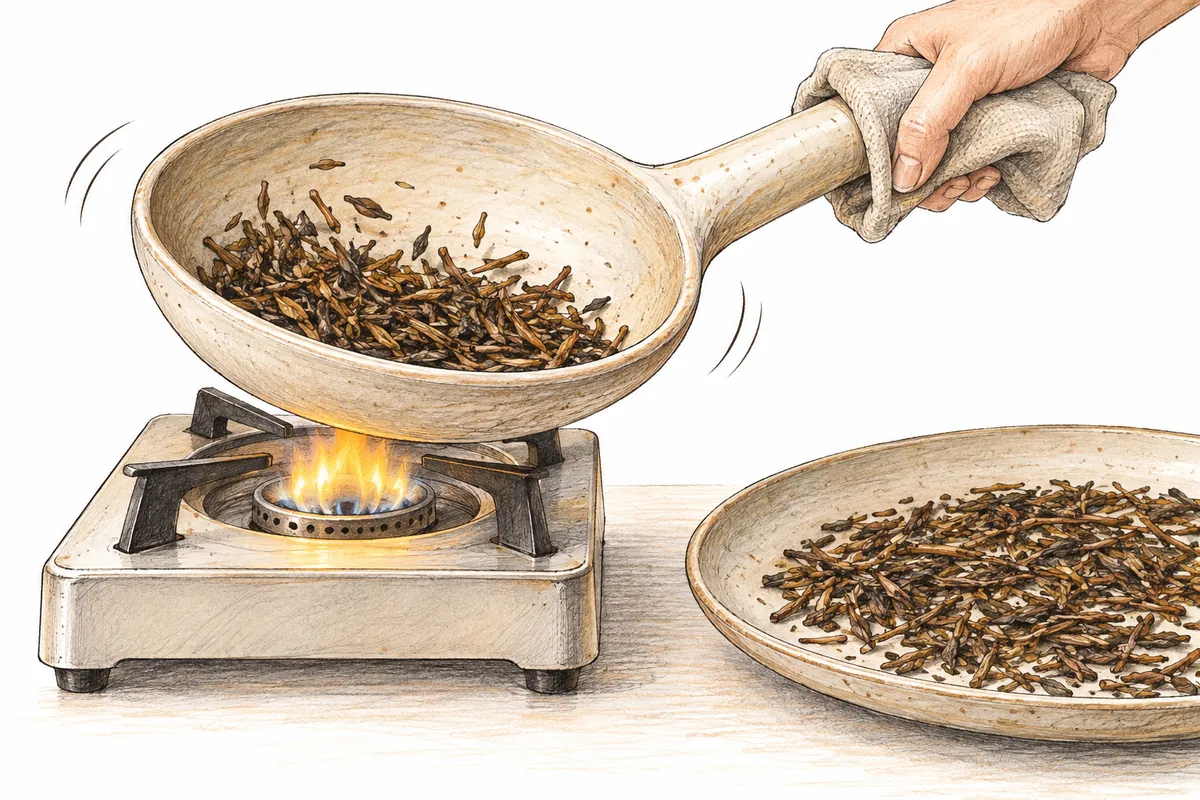
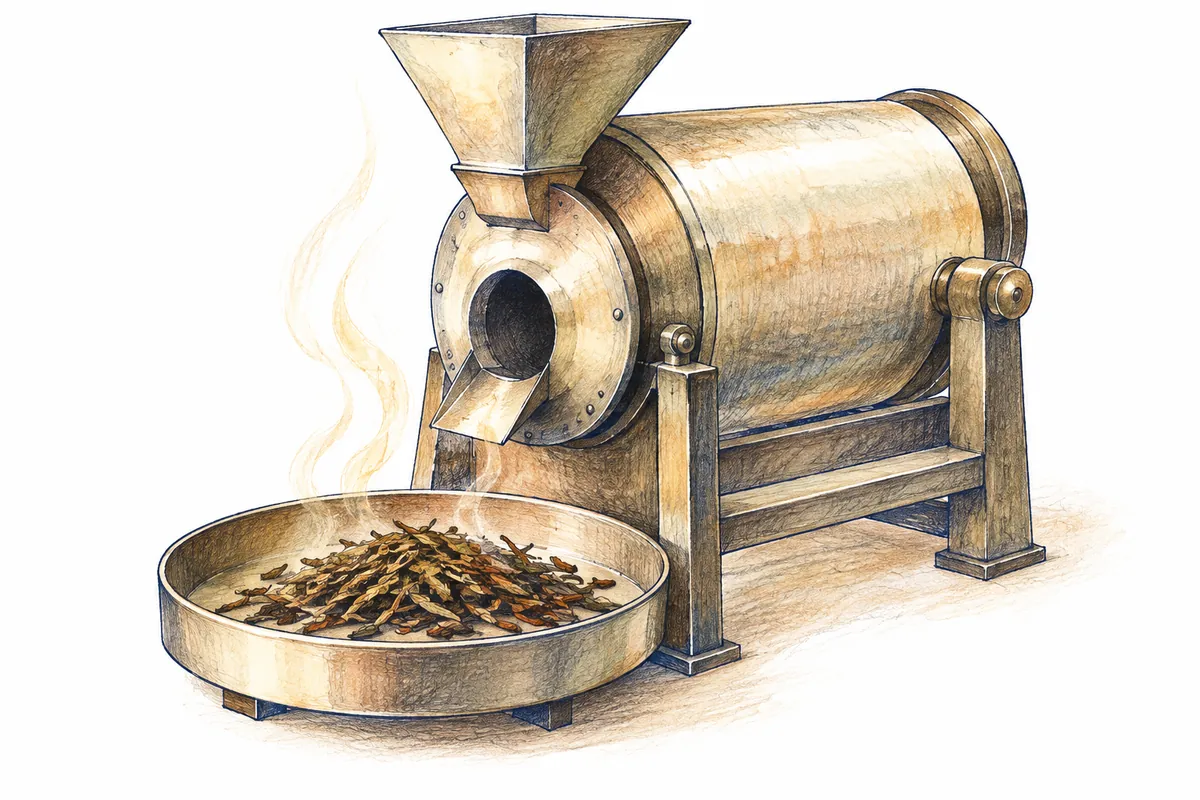
Was this tea sand-roasted or roasted with far-infrared heat? The comparison is tempting, but the two are not necessarily separate methods: some sand roasting uses far-infrared heat from warmed stones. Descriptions of roasting mix the shape of the equipment, the transfer of heat, and the relationship to the flame. Untangling the names helps explain what the machinery does.
What differs between hojicha roasters: sand, direct fire or far-infrared?
Sand roasting, direct fire and far-infrared heat do not belong to the same layer. A roaster description mixes three of them: the vessel that holds the tea, the way heat is delivered, and the contact with the flame. Read them separately and they stop looking like three alternatives to choose between.
The words sort into three layers. A rotating drum names the vessel and its movement, far-infrared names the way heat is delivered, and direct fire names the contact with the flame. Because these are different layers, one machine can combine them, as in sand roasting that uses far-infrared heat from warmed stones. And a machine’s name alone does not settle the taste: leaves or stems, how the material is handled and how the heat is adjusted all belong in the reading.
A rotating drum describes the vessel holding the material and its movement. Far-infrared describes a way of delivering heat, while direct fire describes the relationship to the flame. “Rotating drum or far-infrared” is therefore not necessarily an either-or choice; some machines use both.
It is similar to thinking separately about a frying pan’s shape and the appliance heating it. When reading a product description, distinguish what holds the material, how heat reaches it, and how it moves. This helps organise the differences behind similar-sounding names.
Sand roasting passes heat from warmed stones
The accounts quoted below are published by the companies themselves: Chaho Furyu, Yanoen, Yamamasu, Marubishi and Minocamo Chaho. All five set out the method they use and the finish they are after with it. They share no common set of temperatures or times, so the same method name can serve different intended finishes.
Chaho Furyu describes sand roasting as a traditional method using far-infrared heat from warmed stones. The shop aims to heat the tea evenly and draw out sweetness without scorching it. Look beyond “sand” in the name to the explanation of how stones carry the heat.
Yanoen uses both a sand roaster and an infrared finishing machine in the stage where blended tea receives further high-temperature heating. One shop does not necessarily use just one method. Read the choice of equipment in relation to the finish the producer wants.