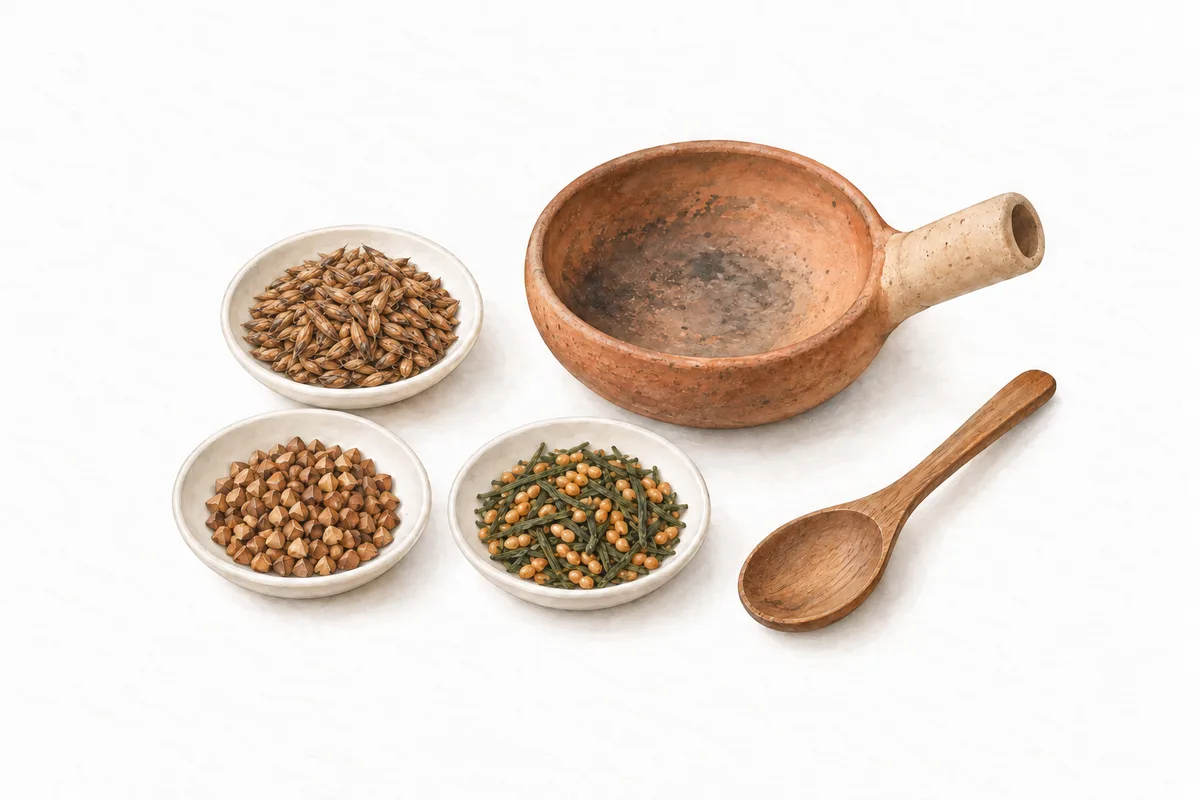
Mugicha in the refrigerator, sobacha at a soba restaurant, genmaicha in the teapot: all are toasty “teas,” but they do not roast the same things. Following barley, buckwheat seeds, rice, and tea leaves through their processes shows that roasting is about more than hojicha.
For mugicha, barley is roasted before its particle size is adjusted
Marubishi, a producer of mugicha and other drinks, lists small-grain barley, large-grain barley, and naked barley as its materials. Selected barley goes into a roaster and is roasted through to the center. For tea bags, the roasted barley is crushed to a suitable particle size before packing.
Roasting and breaking into smaller pieces are separate stages here. That may be hard to see from the grains inside a bag, but there is a sequence: roast the original barley, then shape it into the form used for the drink.
Sand roasting is used for barley as well as tea leaves
Ogawa Sangyo publishes a process using domestically grown six-row barley: barley and silica sand enter the first kiln at 250°C for one minute, followed by the second kiln at 150°C for one minute. Heating the barley together with sand offers a connection if you are familiar with sand-roasting tea leaves.
Marubishi describes a different process, generally roasting at 200–280°C around two or three times. These figures belong to each company’s equipment and process. They are not a common scale for ranking higher temperatures as deeper roasts or settings to transfer to a frying pan at home.
Sobacha roasts buckwheat seeds rather than tea leaves
Nikkoku Seifun describes sobacha as a grain tea made by roasting buckwheat seeds. The company describes an amber liquor, a mellow taste, and a toasty aroma. Like mugicha, it is not made from the leaves of the tea plant.
Having “tea” in the name does not guarantee that the material is tea leaves. Checking ingredients—barley for mugicha, buckwheat for sobacha—takes us beyond grouping drinks by similar roasted aromas and toward their individual production methods.
Genmaicha has a roasting stage and a combining stage
According to Ito En, genmaicha is made by soaking rice in water, steaming it, and then roasting it, before adding bancha, sencha, or similar tea in roughly equal proportions. It combines rice with tea leaves rather than using roasted rice alone.
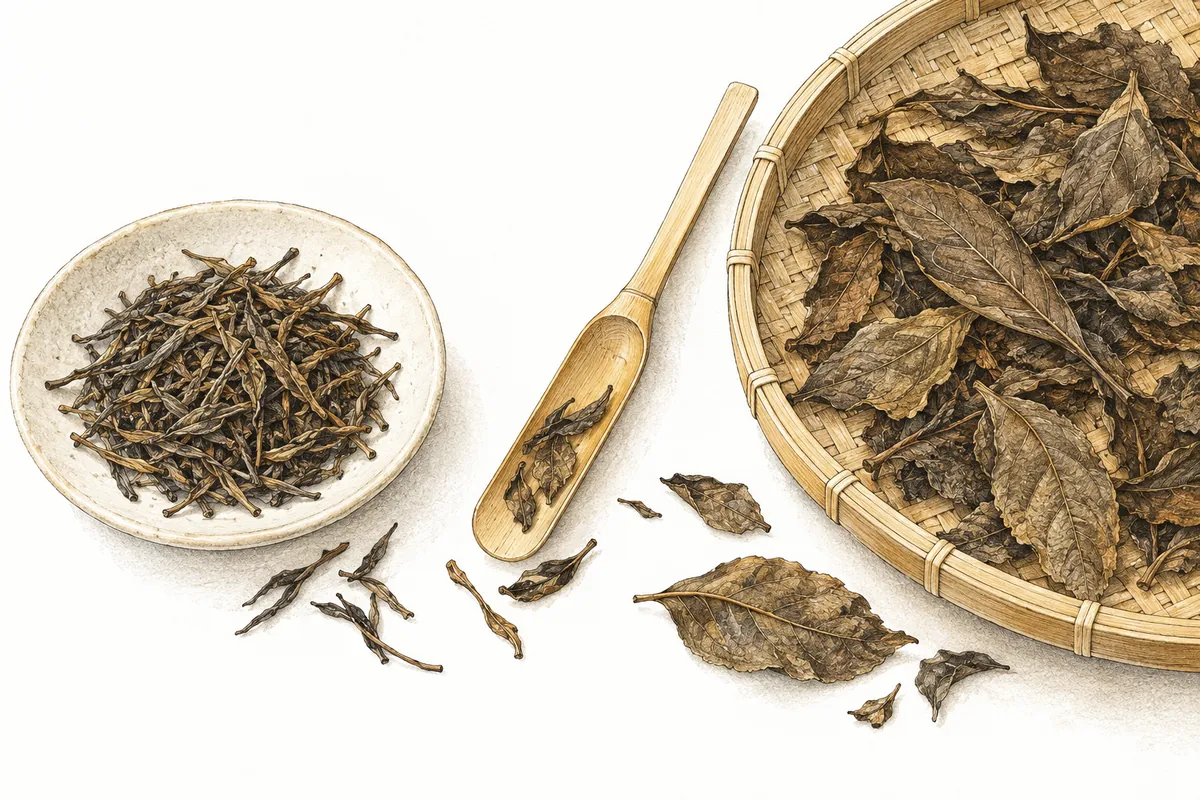
Hojicha roasts the tea leaves themselves to draw out their toasty character. Genmaicha combines roasted rice with tea leaves, so the roasted ingredient and the tea leaves share one bag. Both are toasty teas, but the roasted material is found in a different place.
Compare materials and processes, rather than color alone
Mugicha roasts barley; sobacha roasts buckwheat seeds; genmaicha combines roasted rice and tea leaves; hojicha roasts tea leaves. Adding the action makes the differences easier to explain than names alone.
When comparing drinks, first check the ingredients and production method, then put the aromas into words. Materials can differ even when parts of the experience seem similar, and different materials can still be connected through roasting. Seeing both turns the shelf of everyday drinks into a collection of familiar processing techniques.