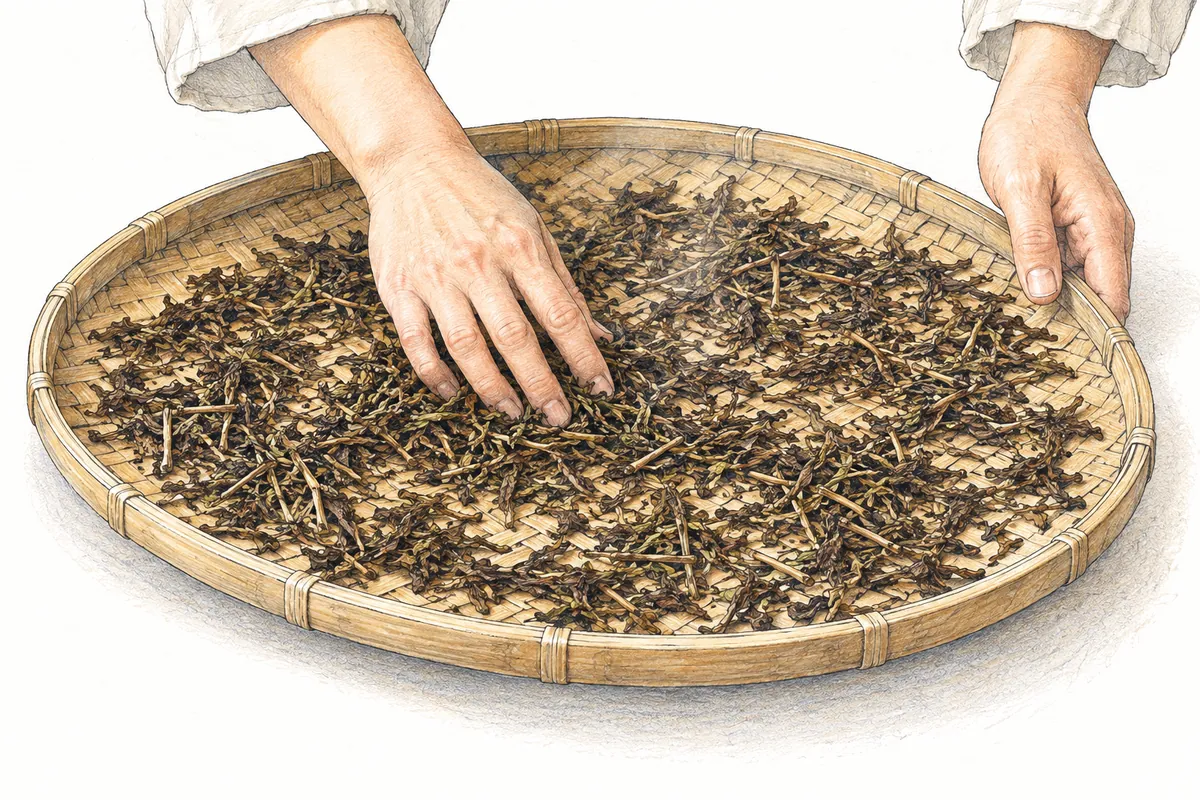
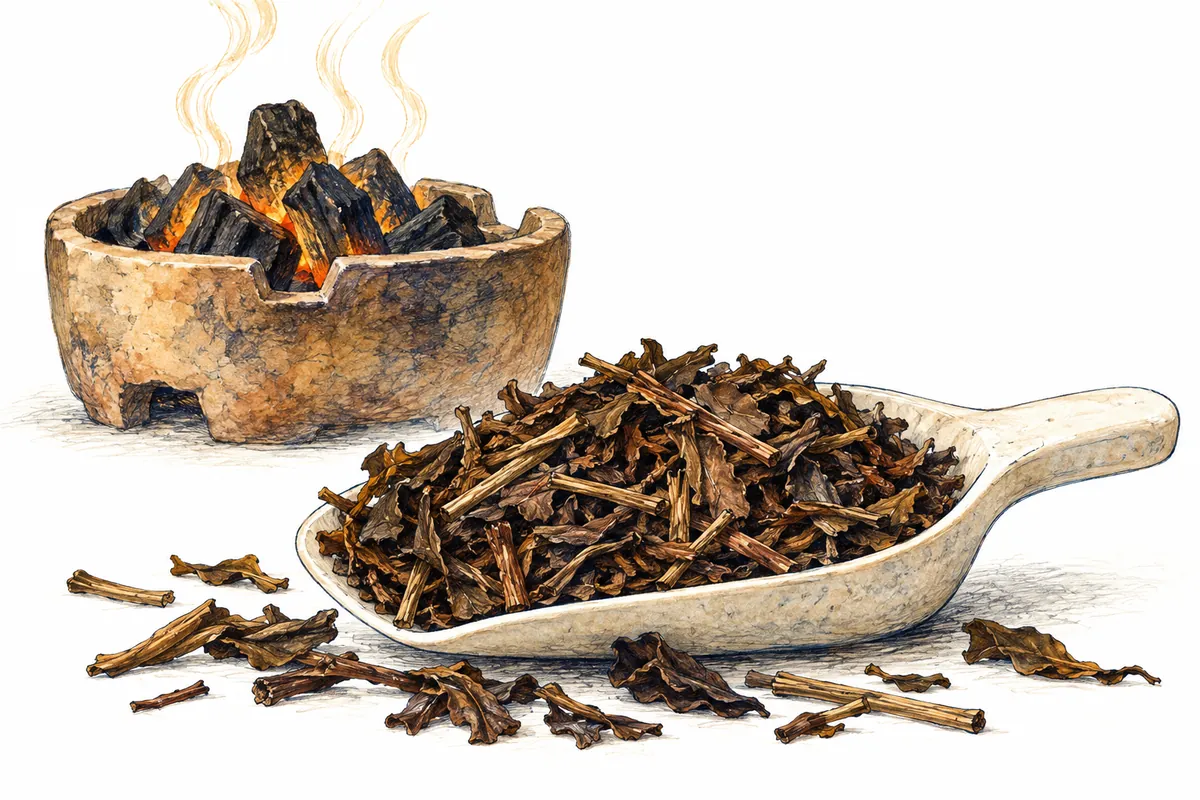
“Roasting over high heat” and “deep roasting” can sound much the same. Yet Kyoto’s Maiko no Chahonpo also offers a tea that lightly roasts karigane so its aroma can be enjoyed. How heat is applied and where the producer chooses to finish are separate questions. Distinguishing them reveals choices within hojicha.
“High heat” and “deep roast” do not mean the same thing in hojicha
“Roasted over high heat” describes how heat is applied; “deep roast” describes the outcome of roasting. They are separate pieces of information, and a stated heat intensity does not settle the material or the course of the heating. Taking them separately means fewer misreadings of a product description.
Three things help tell them apart. High heat is the operation, deep roast is the finish, and karigane is the material: the words on a bag fall into those three layers. Kyoto’s Maiko no Chahonpo takes the same karigane in two directions, one dark-coloured with a strong roasted aroma, the other lightly roasted over gentler heat. And moving from light to deep is not a ladder of progress; you can choose the direction you want to drink.
“High heat” describes how heat is applied, while “deep roast” describes the roasting outcome. Even if heat intensity is stated, the material and course of heating are not necessarily the same. Treating these as separate pieces of information helps avoid misreading tea descriptions.
Yanoen describes hojicha as tea roasted over strong heat and highlights its distinctive roasted aroma. It also says high-temperature roasting requires considerable skill. This is an account of the judgment needed to handle that heat, rather than a claim that anyone using high heat will create the same aroma.
Two Kyoto merchants take the same karigane in two directions
What we read here are the product descriptions published by Yanoen and Maiko no Chahonpo. Both set out, for their own products, the heat used and the finish they are after. Neither account stands for how Kyoto as a whole roasts tea.
At Maiko no Chahonpo, karigane is stem tea separated out during the production of gyokuro or sencha. The shop describes its Hojicha Kaori Fumi as karigane roasted thoroughly to develop a dark colour and a strong roasted aroma.
Its Asairi Hojicha, by contrast, is described as slowly and lightly roasted over gentler heat than Kaori Fumi, offering both hojicha aroma and karigane aroma. Both use karigane, but they differ in how they present aromas from the material and from roasting.