Japan Hojicha AssociationJapan Hojicha Association

Tea gets more interesting with roasting.

Why a hojicha latte tastes different at a shop and at home

Chapter 2 · 2 of 4 sections readable now

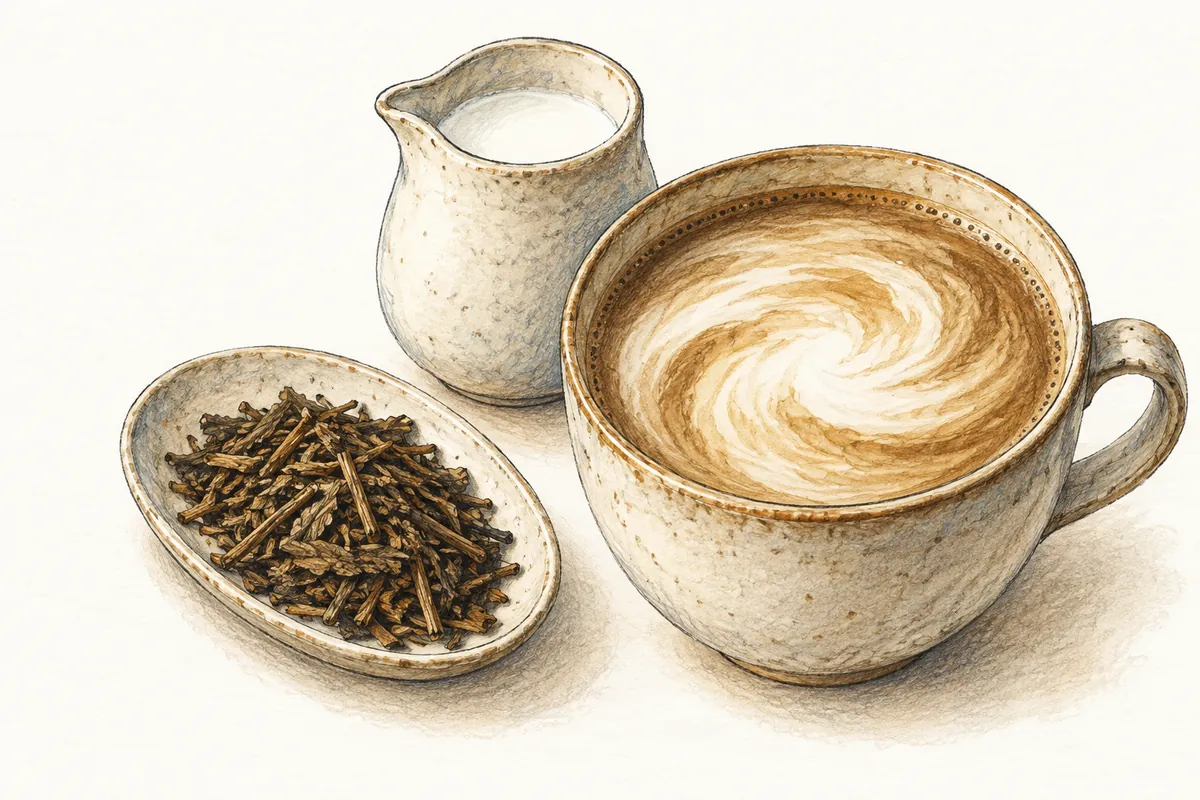
Illustration of dark brown hojicha leaves, a milk pitcher and a hojicha latte with a pale swirl of milk

A hojicha latte at a shop and the one you make at home: where the difference comes from.

02

Aromas that milk covers, and aromas that hold up

Which tea aroma would you like to remain after adding milk? Tea merchants’ reasons for recommending deep roasts and a recipe with a tea substitution suggest ways to find your preferred latte.

Illustration of dark brown hojicha leaves, a milk pitcher and a hojicha latte with a pale swirl of milk

A hojicha you like on its own is not necessarily one you will like equally in a latte. For a latte, the question is what tea aromas you want to notice in the cup combined with milk. Reading the reasons behind a recommendation for deep roast helps distinguish choosing the tea from using the recipe.

The reason for a deep roast lies in the finished latte

FAR EAST TEA COMPANY recommends starting with a deep roast as a tea whose aroma remains distinct after milk is added. It explains that aromas resembling roasted grains or nuts are less easily overwhelmed by milk. The judgement concerns the aroma after combining, rather than the strength of the tea alone.

Grains and nuts are comparisons used to describe aroma, not statements that those ingredients are present. Separating the ingredient list from the words describing aroma makes it easier to picture the intended cup.

Swapping the same quantity of tea gives a clear way to try

Maruhachi Seichajo’s bōcha latte recipe suggests replacing Kenjō Kaga Bōcha with the same quantity of its deep-roasted hojicha BOTTO! The company says this produces a flavour with greater depth. This example is useful because you can choose one official recipe, then change the tea within its instructions.

For the comparison, keep milk, sweetness and the other steps the same so that the change is clear. You are, however, swapping the whole product. A difference in aroma cannot be attributed solely to roast level.

Compare a sip of tea with a sip of latte

To try it, taste a little of the tea prepared according to the recipe before adding milk. Write separately what you notice at that stage and in the finished latte. It gives you a more concrete question to explore next: is the tea’s aroma faint, or is it harder to find in the combination you made?

This is an observation to help adjust your own latte, not a test assigning a standardised score. The direction you prefer will differ according to whether you like the tea to stand out clearly or to drink it more gently with milk.

Begin by changing either the tea or the recipe

Switching to a deep roast, increasing the tea and reducing the milk all at once makes the reason for a changed impression harder to follow. Use the same recipe when comparing teas, and the same tea when exploring proportions. That distinction lets experience carry over into the next cup.

“Standing up to milk” is one possible aim, not the correct destination for every latte. Starting with a deep roast, put into your own words which aromas you want to retain and how prominent you want them to be. This offers a way towards your preference.

When you like a result, keep the product name and recipe along with one detail you enjoyed about the finished latte, such as “I could still notice the roasted aroma after the milk”. It becomes a note you can use when choosing tea next time.
Updated 21 September 2026This section on its own page

04

Choosing ingredients and tools to get closer at home

Maruhachi Seichajo brews tea for two servings; Ito En uses a specified instant tea for one. Here are two hojicha lattes to make at home.

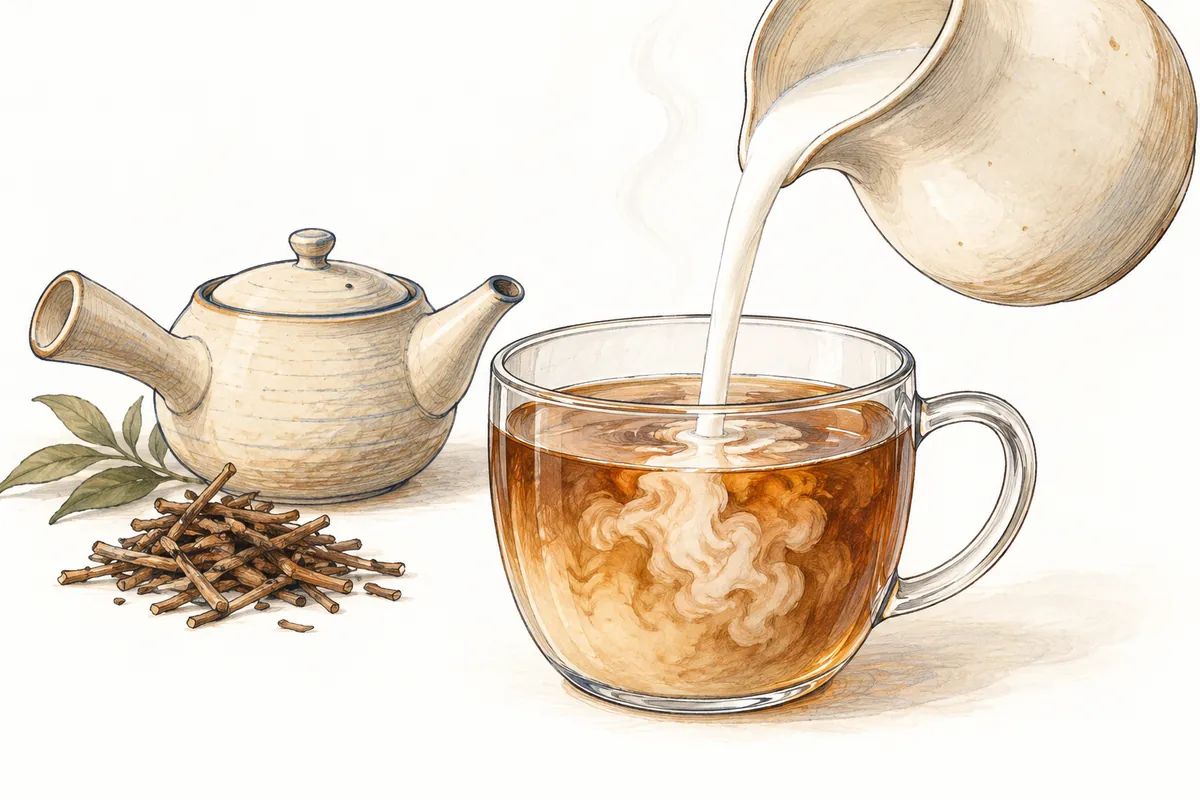
Illustration of warmed milk being poured from a pitcher into a cup of tea brewed in a teapot

A homemade hojicha latte can begin with brewing tea or dissolving an instant tea powder. Before going into the kitchen, look at the official recipes from Maruhachi Seichajo and Ito En. Their products and serving counts differ, so begin by choosing one and following its quantities and method.

Maruhachi Seichajo: brew tea for two servings

Maruhachi Seichajo’s bōcha latte uses 18 g of Kenjō Kaga Bōcha, about 9 tablespoons, or 6 Kenjō Kaga Bōcha tea bags. Also prepare 320 mL of boiling water, 80 mL of milk and 10 g of sugar. These quantities make two servings, combining brewed tea with a relatively small amount of milk.

The method has three steps. First, put the tea and boiling water in a teapot or heatproof container and wait 2 minutes 30 seconds. Next, put the sugar in cups, pour in the brewed tea and dissolve it thoroughly. Finally, add warmed milk.

Ito En: dissolve instant tea for one serving

Ito En’s hojicha latte uses 1 tablespoon of Sarasara Tokeru Oi Ocha Hojicha instant tea, 30 cc of hot water and 140 cc of milk for one serving. This recipe uses a larger proportion of milk. The hot water dissolves the specified instant product; there is no tea-infusion step.

Put the product and hot water in a cup and dissolve it thoroughly. Heat the milk in a small pan while stirring with a whisk, stopping just before it boils, then pour it into the cup.

Next time, move towards your own taste

Maruhachi Seichajo’s recipe serves two; Ito En’s serves one. They also differ in whether you infuse tea or dissolve a specified product. Use each recipe’s own quantities and method, and match serving counts when comparing them.

Measure ingredients given in tablespoons using that unit. After making a recipe as written once, you might vary the sweetness or milk quantity slightly next time. Remembering the first cup lets you compare what you changed and how the taste changed. You can gradually find the proportions you enjoy.

Updated 21 September 2026This section on its own page

2 more sections will follow.

Back to the contents