Japan Hojicha AssociationJapan Hojicha Association

Tea gets more interesting with roasting.

What you learn first

Prologue · 5 of 5 sections readable now

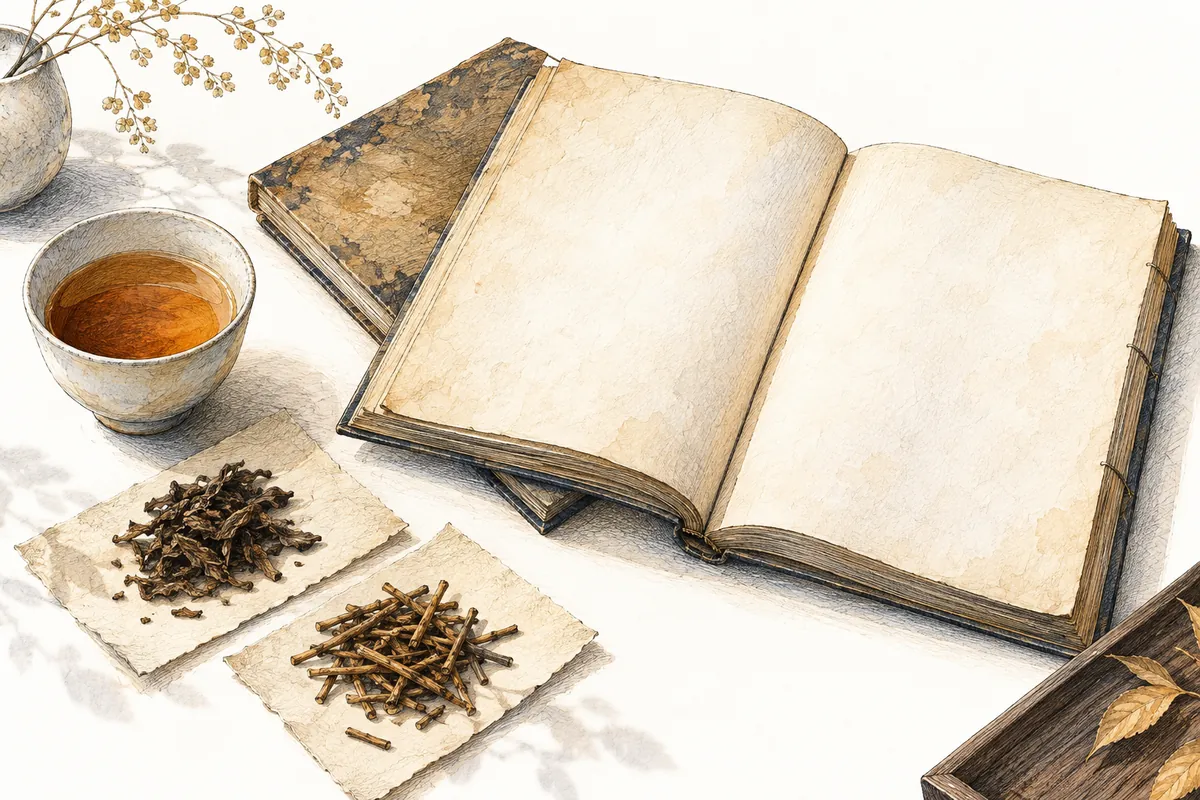
Illustration of an open old book and a closed book, tea leaves and stems on paper, and a teacup, suggesting the reading of historical sources.

How far the aroma and taste of the same leaves move with roasting, and again with blending: the whole picture, up front.

01

What is hojicha? How one word, "green tea", becomes three packets

Sencha, hojicha, genmaicha: the ingredients on the back come to the same one word, yet the contents differ. Two things can be moved, the roast and the blend, and this follows where each leaves its mark on the packet.

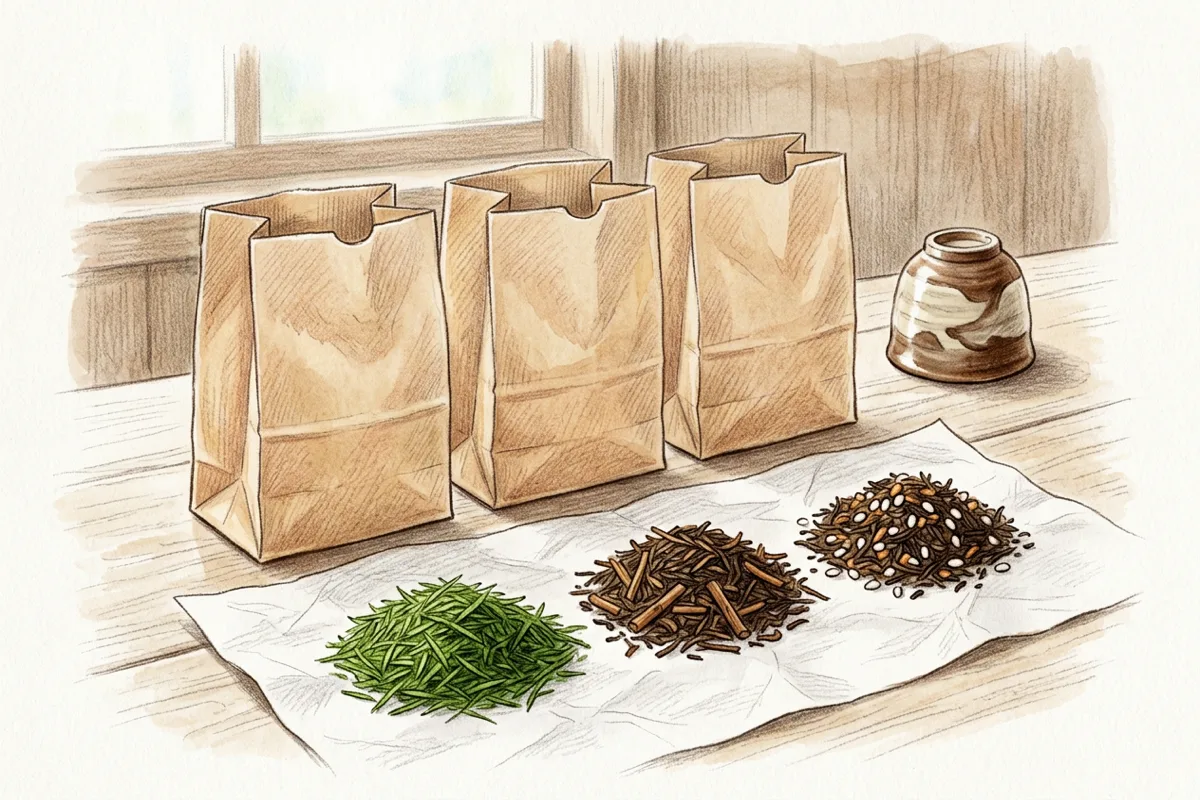
An illustration of bright green tea leaf, dark brown leaf with stems mixed in, and leaf with roasted rice mixed in, each in a small heap on a sheet of white paper.

Three packets stand on a tea shop's shelf. The names on the front read sencha, hojicha and genmaicha. Turn them over and the ingredients on all three come to one word, "green tea", with "brown rice" added to one of them.

What follows traces how three packets part ways from that single word: first the blend, then the roast, then the blending that never reaches the label.

One word on the back, three on the front

Laid side by side face down, the three packets show the same small print in the same places. Only two things can be moved: the roast and the blend.

It is like water from one river taking a new name each time it branches. The industry's labelling rules settle the words a packet may carry. So both the roast and the blend leave a trace on it.

The sources speak only to the words on the packet. The words for the blend come first.

Stems, roasted rice, and a mix

Shake a packet heavy with stems and the thin twigs rattle. The blend is settled clearly, in the words of the name itself.

Under the labelling rules, kukicha and bōcha are teas holding a large share of stems and leaf stalks sorted out in refining. Genmaicha is sencha, bancha or similar tea with roasted rice added. Different kinds of tea combined are called mixed tea.

What the rules give is the name for what went in, and no more. After the blend comes the fire.

A line for finishing, a line for roasting

Standing by a roaster, the dry, toasty air meets the face. What separates hojicha from sencha is not the raw material but the heat added afterwards.

An appendix to the same rules puts the finishing fire and roasting on separate lines, at different temperatures. It names neither the equipment nor where the temperature is taken. What it divides is not kinds of tea but whether a packet may say "manufacturer" or has to say "processor".

Past that heat, the direction depends on where the measuring was done. In a prefectural tea station's figures, the source of astringency fell as the roast deepened, to about a fifth at the darkest. The compounds taken as a marker of roast aroma came out highest at the light end. In another prefecture's trial, roasting stems hotter made the same family of compounds rise with the temperature.

The conditions differ, so these are two separate stories, and the evidence stops there. What this line actually divides is taken up in a later chapter. Last comes a step that never shows on the packet.

Blending, which the label never shows

In a merchant's workroom, several lots of unrefined tea are turned into one heap. Blending, gōgumi (合組), alone never reaches the packet.

Gōgumi is the merchant's step of combining several unrefined teas into the flavour of one bag. Combining moves the figures too. In a government table with the brewing held equal, genmaicha, with its roasted rice, has about half the caffeine of hojicha.

The blending ratio is not in the table, though, and the evidence goes no further. The conditions for roasting and for blending are still to be measured. The figures and conditions are gathered just below.

The numbers in detail

Labelling rules
The Green Tea Labelling Standard (緑茶の表示基準) of the Japan Tea Central Public Interest Incorporated Association. The definitions of kukicha and bōcha, genmaicha and mixed tea come from it.
Temperature lines
In the appendix "Classification of manufacture, processing and sale", the finishing fire at 70–130°C and roasting at 140°C and above sit on separate lines.
Where the line leads
What that line actually divides is taken up in chapter 5.
Catechins
From the Tea Research Station, Kochi Prefectural Agricultural Technology Center. In the 2013 data, the dark roast of first-flush tea held about one fifth of the catechins in aracha.
Pyrazines
In the same report, the two pyrazines used as an index of roast aroma were highest at the light roast, in first-flush tea and karibancha alike.
Stem trial
The Industrial Research Institute of Ishikawa and others roasted stems at drum inner-surface temperatures of 180–220°C. All eight pyrazines rose with the temperature.
Caffeine
In the Ministry of Agriculture, Forestry and Fisheries table, hojicha is 20 mg and genmaicha 10 mg per 100 mL of infusion.
Brewing conditions
Both use 15 g of leaf, water at 90°C, 650 mL and 0.5 minutes. No blending ratio is published.
Updated 17 October 2026This section on its own page

02

Hojicha caffeine, lattes, roasting at home: the short answers first

Caffeine in the evening, a latte like the café's, an old bag of sencha roasted at home. For the three questions at the entrance to hojicha, this sets out early where each one actually gets decided.

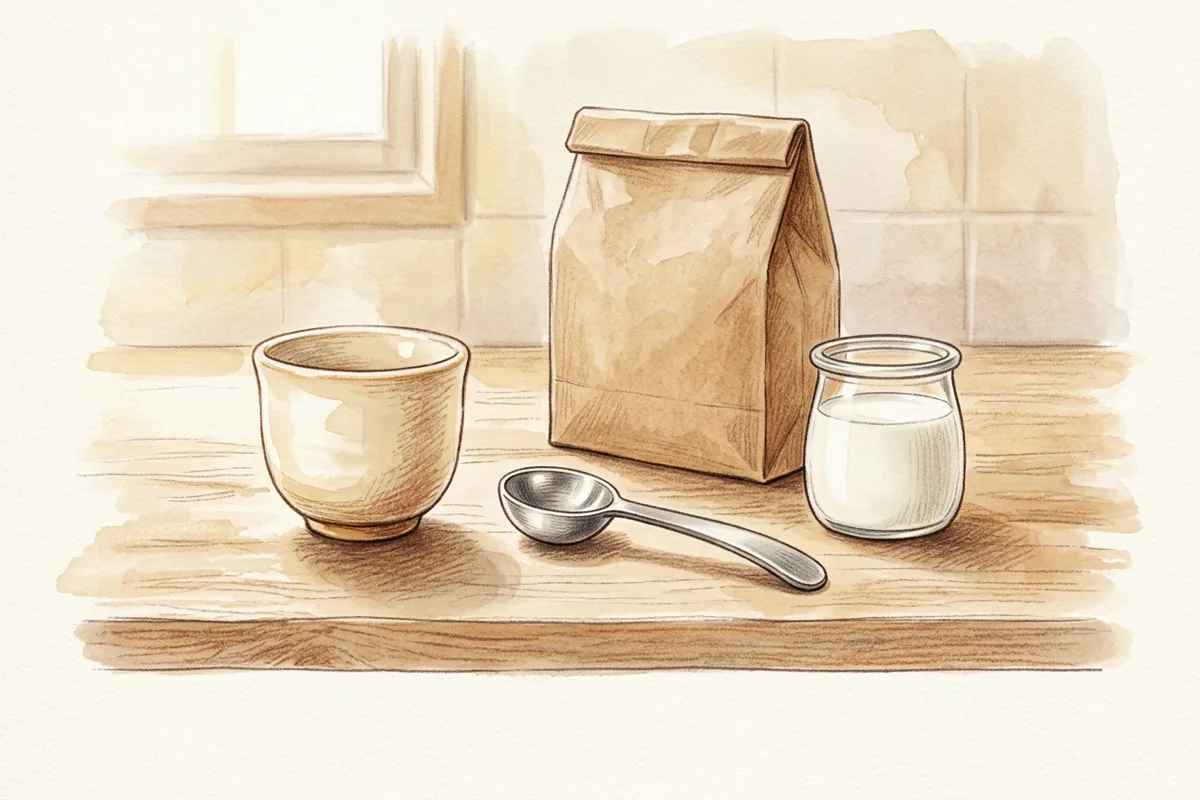
An illustration of a teacup, a measuring spoon and a small glass of milk standing in a row on a kitchen counter, with a plain paper bag behind them.

Evening, a cup on the table, and the hand stops. Through the steam comes the doubt: is this a reasonable hour to drink it? Next morning brings a latte in a paper cup, and an old bag of sencha turns up at the back of the kitchen.

What follows says, ahead of the chapters that answer them, where each of the three gets decided: caffeine, the latte, and roasting at home.

An evening cup and its conditions

Under the lamp, the hojicha in the cup looks a reddish brown. Caffeine turns out to be a question of how the tea was brewed.

The government's published table brews each kind of tea under its own conditions. Gyokuro's figure is eight times hojicha's, but gyokuro is brewed with a lot of leaf in very little water. Line them up again per amount of leaf, and the gap all but disappears.

The four rows of the table below are not under the same conditions. Only hojicha and genmaicha share them. The table supports one thing: without matching the conditions there is no fair comparison, and matching them is a later chapter. After the cup comes the paper one with the latte.

Figure 0-2-1Caffeine and infusion conditions by kind of tea

TeaCaffeine (mg per 100 mL of infusion)Infusion conditions (leaf, water temperature, volume, time)Leaf per 100 mL of water (calculated)
Gyokuro16010 g leaf・60°C・60 mL・2.5 min16.7 g
Sencha2010 g leaf・90°C・430 mL・1 min2.33 g
Hojicha2015 g leaf・90°C・650 mL・0.5 min2.31 g
Genmaicha1015 g leaf・90°C・650 mL・0.5 min2.31 g
Drawn from "About caffeine", Ministry of Agriculture, Forestry and Fisheries. Values from the Standard Tables of Food Composition in Japan, 2020 edition (eighth revision); page last updated 28 August 2026. The leaf per 100 mL of water is calculated from the published infusion conditions and is not a figure written on that page. ⚠️ These four rows are not under identical conditions. Only hojicha and genmaicha share infusion conditions, so dropping the conditions column makes the table itself wrong.

A paper cup, and the quantities

Lift the lid of the paper cup and sweet, milky steam rises. The latte turns out to be a question of ratio.

In one shop's published recipe, hojicha powder is dissolved with sugar and hot water into a syrup, then combined with warmed milk. The quantities are given by weight, so what went into the cup, and how much, can be read off the page. That the café cup and the home cup differ is not a matter of skill.

The recipe accounts for one set of quantities and nothing beyond. What to change to bring the two closer is a later chapter. After the latte comes the old sencha at the back of the kitchen.

Old sencha at the back of the kitchen

Open an old bag of sencha and a faint, dry, green smell comes out. Roasting at home is more tangled.

In a prefectural tea station's figures, a light roast barely lowered the caffeine. Only the dark roast brought it down, by around a tenth. No peer-reviewed paper on roasting in a household hōroku or frying pan turned up within the range searched, either.

That is as far as the evidence goes. The chapter on roasting at home begins by fixing the conditions and measuring. The figures and conditions are gathered just below.

The numbers in detail

Chapters
Caffeine is answered in chapter 1, the latte in chapter 2, and roasting at home in chapter 4.
Caffeine
The table is "About caffeine" from the Ministry of Agriculture, Forestry and Fisheries (Figure 0-2-1). Per 100 mL of infusion, gyokuro is 160 mg and hojicha 20 mg, an eightfold gap.
Where the values come from: The Standard Tables of Food Composition in Japan, 2020 edition (eighth revision). The page was last updated on 28 August 2026.
Gyokuro's conditions
10 g of leaf to 60 mL of water, or 16.7 g per 100 mL of water, more than seven times hojicha's 2.31 g.
Per gram of leaf
Lined up again this way, the eightfold gap shrinks to about 1.1 times [a calculated value].
Latte recipe
The one Kurasu publishes in Kyoto (4 July 2024).
Roasting and caffeine
From the Tea Research Station, Kochi Prefectural Agricultural Technology Center, in the caffeine table of the following year (2014 data). The light roast barely changed it; the dark roast was 6–13% lower.
Extraction
That report steeps 1.9 g of leaf in 200 mL of boiling water for 5 minutes. Values are per 100 mL of tea liquor.

Updated 17 October 2026This section on its own page

03

Where hojicha comes from: reading the accounts of its beginnings

Where does the easy, memorable sentence about hojicha's beginnings actually lead? From the end of a footnote to a stem tea and some old receipts, the accounts of origin are lined up again by how well each is supported.

Beside the cup, an online encyclopedia is open on the screen. The origin of hojicha as a whole comes down to one sentence in its section on manufacture. A year and a place together, and easy to remember.

What follows traces that sentence's footnote and lines the accounts of origin up again, from the best supported down.

A mail-order page, at the end of a footnote

Tap the small footnote number and the screen flicks over. The sentence leads to the own-brand page of a company that sells hojicha.

It is the page of a hojicha mail-order brand started overseas. It says only that tea merchants roasted leftover leaves and stems. It lists no references at all.

No primary source supporting the account came out of this search. That is where the trail ends. The bōcha section of the same encyclopedia reads a little differently.

The bōcha section, same article

Scroll down and the name of a stem tea appears. In the same article, the section on Kaga bōcha is supported differently.

Like the rings of a tree, the age of a story is recorded in the documents attached to it. The account of a third-generation merchant devising a roasted stem tea carries footnotes to an advertisement in an old directory and a who's who. Even inside one article, accounts of origin differ in strength.

What can be said is only that the footnotes are of different kinds. This bōcha story turns up on the public side as well.

A stem tea in a public encyclopedia

From a cup of bōcha rises the smell of dry stems. The Kaga story stands on the public side too.

A government encyclopedia of traditional foods records that a merchant found a use for the stems left from drying and put Kaga bōcha on sale. That is some twenty years earlier than the common account, in another place and from another material.

A confectionery company is later recorded launching one, which the column at the end of the chapter covers. A prefectural tea institute issued a research report on the design of roasting machines. Only its title has been checked.

The official history of a long-established tea region mentions neither hojicha nor a roasting step. That is as far as the documents go. Next comes a bundle of old receipts.

Superior, medium, standard

On a tea shop's shelf, price tags mark the superior grade and the standard one. In a pre-war port city, roasted tea was already sold by grade.

Among an institute's expenditure vouchers are purchases of standard and medium roasted tea, and of plain and superior. All three grades, superior, medium and standard, appear in its books.

Grades appear when enough people are choosing between them. The receipts support that much and no more. Last comes how to read a year of beginning.

Opening the footnote

As the steam thins, the sentence on the screen starts to look different. A beginning cannot be pinned to one year and one place.

It is like the source of a river, split among many mountain streams. Not writing the undecided as though it were decided is where this book stands.

What is left instead is a habit any reader can use. When an account of origins turns up, open what the footnote points to. A public body's document, or the page of someone selling the thing: that alone changes the weight of the same sentence.

The footnote tells the kind of source and nothing more. The years and names are gathered just below.

The numbers in detail

The sentence
In the manufacture section of the Japanese Wikipedia (revision of 20 July 2026): "today's method is said to have been established in Kyoto in the 1920s".
The footnote
It leads to the own-brand page of a mail-order brand started in Toronto in 2018, which says tea merchants roasted leaves and stems in the 1920s.
The bōcha section
It says the third-generation Hayashiya Shinbei devised a roasted stem tea in 1902, with footnotes to a commercial and industrial directory advertisement of 1916 and a who's who of 1928.
Public encyclopedia
The Encyclopedia of Traditional Japanese Foods (にっぽん伝統食図鑑) of the Ministry of Agriculture, Forestry and Fisheries. It records the Kanazawa merchant Hayashiya Shinbei putting Kaga bōcha on sale in Meiji 35 (1902).
Confectionery company
A Tokyo confectionery company is recorded launching one in Taishō 14 (1925).
Roasting-machine report
The Saitama Prefectural Tea Research Institute issued 焙茶機の考案に關する研究報告 in March 1942. Only the title has been checked.
Official history
The 800-year history of Uji tea from the Kyoto Prefectural Tea Association.
Receipts
Expenditure vouchers of the Okura Institute for the Study of Spiritual Culture in Yokohama. The 1936 (Shōwa 11) entries read "1 kin of standard hōji tea, half a kin of medium" and "1 kin of hōji tea, 1 kin of superior".
This book
The title is お茶は、焙煎でもっとおもしろい.

Updated 17 October 2026This section on its own page

04

What we cover here, and what we leave out

Two things only: how to read the roast, and how to read the blend. The line against black tea and coffee is drawn with the material and the roasting; regional catalogues, recipes and health effects stay out. What changes is how a packet is read.

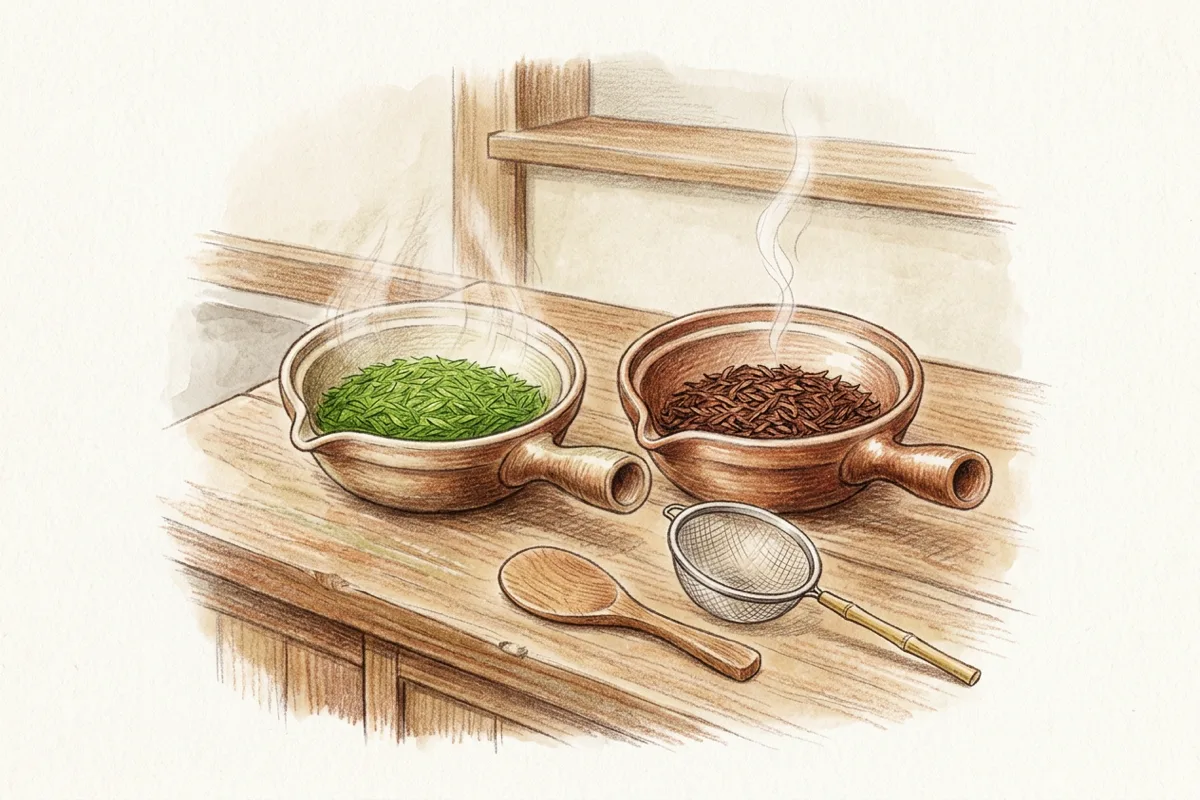
An illustration of two hōroku of the same shape side by side, the leaf in the left one bright green and the leaf in the right one dark brown with a thread of smoke rising.

On the same shelf stand hojicha, stem hojicha and roasted genmaicha. All three carry "hōji", and what is left of each name is a method, a part of the plant, or something mixed in.

What follows sets out what these pages take on and what they leave alone, together with the line against neighbouring drinks.

Only two things taken on

Pick up a packet and the print on the front is a different size from the back. Two things are covered: how to read the roast, and how to read the blend.

The roast is a question of how far the fire went. The blend is a question of how stems, rice or other teas were put together.

Everything else is left to other books and other guidance. First, the line against neighbouring drinks.

A tea leaf, and the seed of a fruit

The hojicha in the cup and the coffee in the mug beside it both smell toasty. The line between neighbouring drinks can be drawn with two things: the material, and the roasting.

What hojicha roasts is the leaf or stem of the tea plant, fire added after the green tea is made. Black tea comes from the same plant, but there the leaves are allowed to oxidise. That is a different step from roasting, so roasting black tea hard does not turn it into the hojicha that comes from green tea.

Coffee differs from the material up: the coffee industry's own association describes the bean as the seed inside a fruit. Behind the same words, "dark roast", what is put to the fire is not the same thing. The sources speak to material and process, and that is all. Next, what stays off the shelf.

What stays off the shelf

Next to this shelf stand books of recipes and books about daily life. What is left out is settled from the start.

There will be no catalogue of regional brands, because a place name alone does not settle what is inside. Recipes and confectionery are left to the books that appear regularly. History is left to a scholar's two volumes on the folklore of bancha.

On health there is no assertion here: these pages go as far as the rise and fall of compounds. What those do in the body is left to the guidance of public bodies. Next, the packet after the last page.

The back of the packet, afterwards

Back at the shelf, the front and back of a packet start to look like two different faces. What changes by the last page is how a packet is read.

"Dark roast" on the front is each shop's own word. No reference temperature for roast level is set anywhere. The field marked "name" on the back, and the ingredients, are the side whose words the labelling rules settled.

That line becomes visible on the packet. The rules account for how the words are fixed, and no more. Names and years are gathered just below.

The numbers in detail

Coffee bean
The National Coffee Association describes the bean as the seed inside the coffee fruit.
Coffee page
That description is on its page "What is Coffee?".
Green tea's heating
The Ministry of Agriculture, Forestry and Fisheries' "Types of tea with varied flavours and aromas" says green tea is heated early in processing.
Black tea's oxidation
The same guidance says black tea is made by letting oxidation proceed.
Recipe books
Recipes and confectionery are left to the books appearing regularly since 2012.
History books
History is left with Nakamura Yōichirō's two volumes on the folklore of bancha.
Labelling rules
The Green Tea Labelling Standard (緑茶の表示基準) of the Japan Tea Central Public Interest Incorporated Association.
How books were checked
Across National Diet Library Search, CiNii Books and Rakuten Books (22 September 2026).

Updated 17 October 2026This section on its own page

05

Why there is no book about hojicha

There are books on black tea and on matcha, yet three separate searches turned up no general book with hojicha as its subject. Here is what the books carrying the word actually are, and the one thing to watch while counting.

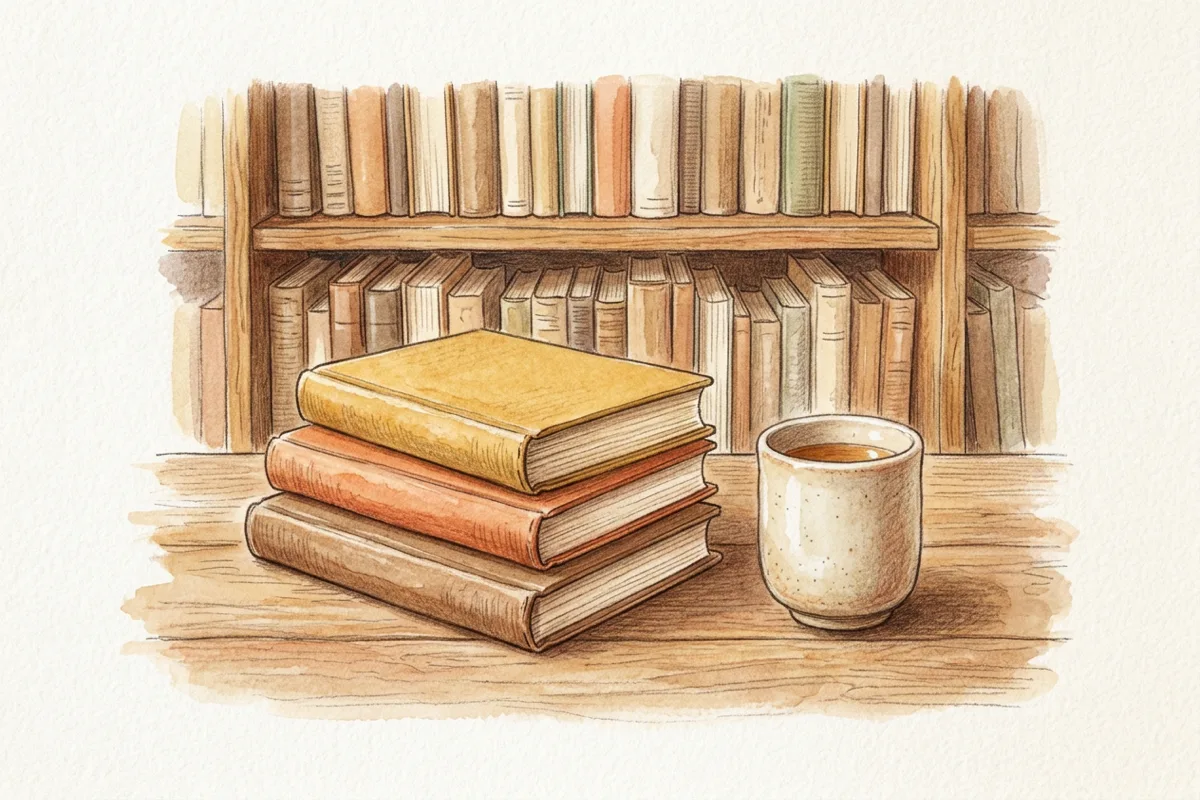
An illustration of three closed books stacked in front of a wooden bookshelf, with a teacup standing beside them.

A bookshop shelf holds books on black tea, and books on matcha. Bancha has two scholarly volumes of its own. Type hojicha into a library search box and back come magazine articles and papers.

What follows traces the routes searched, what the books with hojicha in the title turn out to be, and the one thing to watch while counting.

A shelf searched three ways

With each search the list on the screen quietly changes. Not one general book on hojicha as its subject came up.

Three routes were searched: the national library, a union catalogue of university libraries, and a large online bookseller. Some books carry hojicha in the title, but nearly all set it beside matcha or black tea in confectionery. The one that does take it as its subject is a confectionery recipe book. Another borrows the word for the title of a collection of literary essays.

Neither a thick tea encyclopedia nor the official textbook of a tea certification gives it a chapter of its own. That holds as far as the tables of contents go. Next, the reason for the absence.

That it would not sell

Every month the new-release tables in bookshops fill with fresh stacks. Why no hojicha book is among them is not known.

That it would not sell, and so does not get published, is a possible explanation. The figures to check that are not to hand, though. The institute that compiles publishing statistics keeps both sales value and new-title counts in a paid annual.

What is known is the absence. It is not there, so it gets written. That is all. Before counting, there is one thing to watch.

Hojicha, the pen name

Further down the search results, titles that are plainly not about tea creep in. One thing is worth watching while counting.

"Hojicha" is also the pen name of someone who writes and draws. The number of volumes a search returns adds up once the author's name is read too.

Any count holds only once the names are sorted out. The figures and titles are gathered just below.

The numbers in detail

Routes searched
National Diet Library Search, CiNii Books and Rakuten Books, run on 22 September 2026.
Six titles
Six books carry "hojicha" in the title, and five are confectionery books setting it beside matcha or black tea.
The one on the subject
Honma Setsuko, Hojicha no Okashi (ほうじ茶のお菓子), Shufunotomo, November 2019.
Essays
Tokiwa Shinpei, Atsui Hojicha (熱い焙じ茶), Chikuma Shobō, September 1993.
Tea encyclopedia
Asakura Publishing's Encyclopedia of Tea (茶の事典, September 2017) runs to 608 pages with no chapter of its own on hojicha.
Certification textbook
The official textbook of the Japanese Tea Certification (Rural Culture Association Japan, May 2023) runs to 242 pages, also without one.
Tables of contents
For both, this holds as far as the tables of contents go.
Publishing statistics
The Research Institute for Publications' "Publishing Statistics of Japan". Sales value and new-title counts appear in its paid annual, Shuppan Shihyō Nenpō.

Updated 17 October 2026This section on its own page

Back to the contents